Adiós Ayacucho: Theatre, Memory, and the Right to Mourn
The play Adiós Ayacucho transforms a story of forced disappearance into ritual theatre, joining political memory, Andean performance, humor, and mourning.
- Yuyachkani
- Adiós Ayacucho
- World Theatre Day
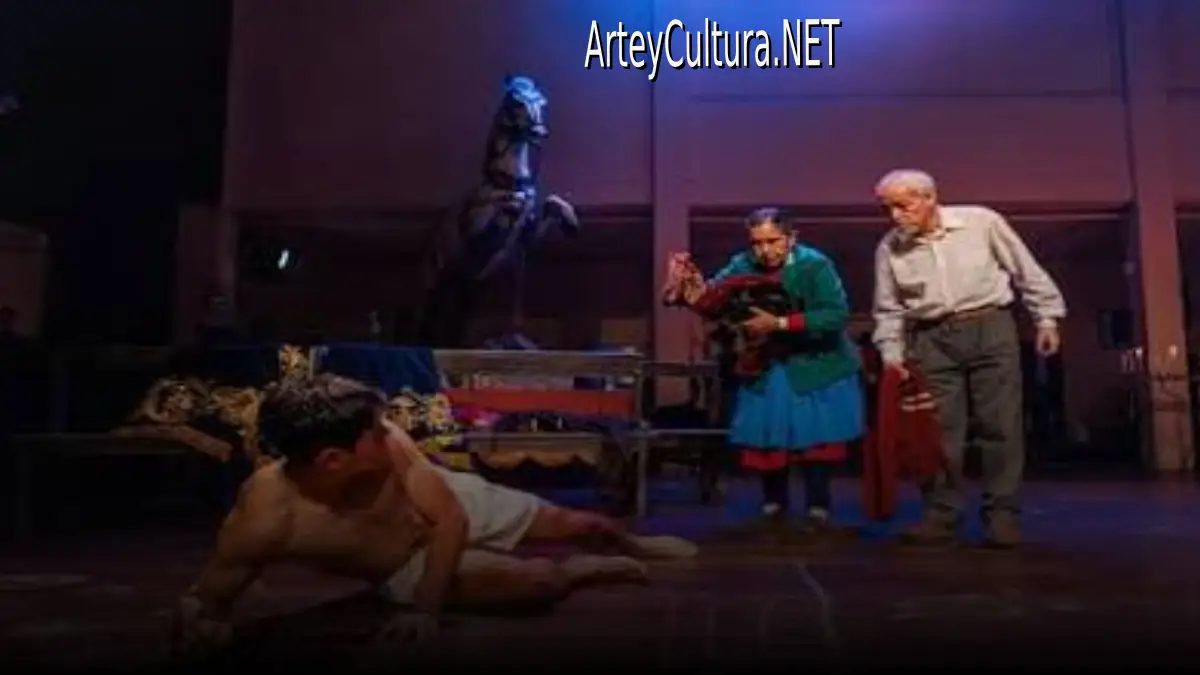
World Theatre Day, observed every March 27, invites audiences to consider theatre as more than entertainment. Few Peruvian works demonstrate that civic power as forcefully as Yuyachkani’s Adiós Ayacucho, a production that turns absence into presence and denied burial into a collective demand for dignity.
From story to stage
Premiered in 1990, the work is based on a story by Julio Ortega and was adapted and directed by Miguel Rubio Zapata. Its central figure, Alfonso Cánepa, is a peasant leader murdered and dismembered during Peru’s internal armed conflict. Unable to rest, he travels symbolically from Ayacucho to Lima in search of his missing remains.
Augusto Casafranca’s performance
Actor Augusto Casafranca carries the production through voice, gesture, dance, and direct address. Rather than impersonating a realistic corpse, he constructs Cánepa through the performative language of the Andean Q’olla. A few objects can become vehicle, body, landscape, or political evidence as the audience completes the transformation imaginatively.
Video: An actor remembers Adiós Ayacucho
In this Spanish interview, Casafranca reflects on the responsibility and craft of embodying Cánepa. His testimony reveals how the role grew from research, theatrical discipline, and an ethical encounter with the disappeared.
Ritual, humor, and mourning
The production does not remain in a single tragic register. Humor interrupts solemnity, while music and ritual prevent the victim from being reduced to a statistic. Ana Correa’s musical and performative presence contributes to a space where the living and the dead can address one another.
Theatre as public memory
The journey toward Lima exposes official indifference and the inequality separating rural victims from centers of power. In later performances, the work’s relationship to memorial sites such as El Ojo que Llora deepened its dialogue with truth, mourning, and human rights.
Video: Why World Theatre Day exists
This Spanish overview explains the origin and purpose of World Theatre Day. Placed beside Yuyachkani’s work, it shows why international celebration matters most when theatre engages living communities and difficult histories.
The legacy of Adiós Ayacucho
The work endures because it does not pretend to repair irreparable violence. Instead, it gives form, voice, and movement to someone whom violence sought to erase. Its legacy is theatrical and moral: a society cannot build memory without naming its dead, listening to survivors, and recognizing every person’s right to be mourned.