Caral and Ruth Shady: Rethinking the Origins of Andean Civilization
Research led by Ruth Shady at Caral revealed a vast early urban centre whose monuments, economy and ritual life transformed the chronology of the ancient Americas.
- Caral
- Ruth Shady
- Andean archaeology
- ancient Peru
- Supe Valley
- World Heritage
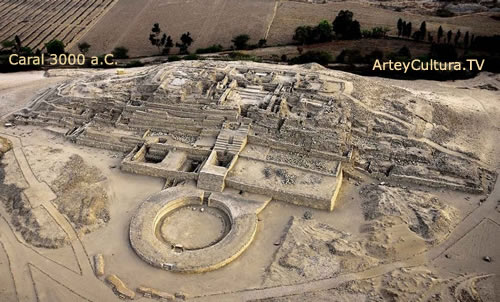
The Sacred City of Caral-Supe, north of Lima in Peru’s Supe Valley, flourished approximately between 3000 and 1800 BCE. Sustained research led by Peruvian archaeologist Ruth Shady established its importance as one of the earliest known urban centres in the Americas.
Ruth Shady and a long research programme
Ruth Martha Shady Solis was born in Callao on December 29, 1946. Trained at the National University of San Marcos, she developed an archaeological career focused on the emergence and organization of complex Andean society.
From the 1990s, her multidisciplinary team combined excavation, dating, conservation and work with surrounding communities. This continuity was essential: Caral’s significance emerged from stratigraphy and comparison, not from one spectacular object.
Monumental architecture and planned space
Caral contains large platform mounds, sunken circular plazas, residential sectors and ceremonial spaces. Their construction required coordinated labour, design and systems capable of sustaining collective projects over generations.
Architecture also organized experience. Movement through stairs, terraces and plazas connected restricted ritual areas with larger gatherings and made political or religious authority spatially visible.
The oldest urban tradition in the Americas
This English-language documentary introduces Caral’s chronology, monuments and regional setting. Aerial and ground-level views help viewers understand the site as an urban landscape rather than a collection of isolated pyramids.
Economy, exchange and cultural life
The Supe Valley connected agricultural production with rich Pacific fisheries. Cotton was particularly important because it supported nets and exchange between inland farmers and coastal communities. Materials from distant ecological regions indicate broader networks.
Archaeologists have recovered musical instruments, fibre objects and evidence of ritual activity. Claims about early recording devices and the relative scarcity of weapons continue to require careful interpretation; absence of visible fortification does not prove a society entirely free of conflict.
The lost pyramids of Caral
This full English BBC documentary follows the evidence and debates that brought Caral to international attention. It is valuable because it presents archaeological reasoning, fieldwork and competing explanations rather than treating the site’s age as a sensational fact alone.
World Heritage and preservation
UNESCO inscribed the Sacred City of Caral-Supe on the World Heritage List in 2009. Recognition increases visibility but also brings responsibilities involving conservation, tourism, environmental threats and local participation.
Archaeological sites are nonrenewable archives. Looting, uncontrolled development and climate events can destroy spatial relationships that no restoration can recreate.
The significance of Caral
Caral altered assumptions about when urban organization emerged in the Americas and demonstrated the early complexity of Andean development. Ruth Shady’s legacy lies both in the interpretation and in the institutional effort to protect the site. Together, city and research programme show how evidence can revise a continent’s historical narrative.